
Research area
Neuroscience: neural control of sleep/wake cycles.
Education
Doctoral candidate of in the department of Biological Sciences at NJIT
About Me
My research is focused on the physiological mechanisms that integrate regulatory cues for the
control of sleep/wake cycles. I use the cavefish Astyanax mexicanus and its extant surface
ancestor to compare the neural control of sleep between animals that live in complete darkness
and those with circadian light cues. This allows me to better isolate the effect of energy
homeostasis on the sleep/wake cycle.
Contact info
kathryn.e.gallman@njit.edu

Animal Storage Cage/ Habitation Chamber

Rotarod

Morris Water Maze

Elevated Zero Maze
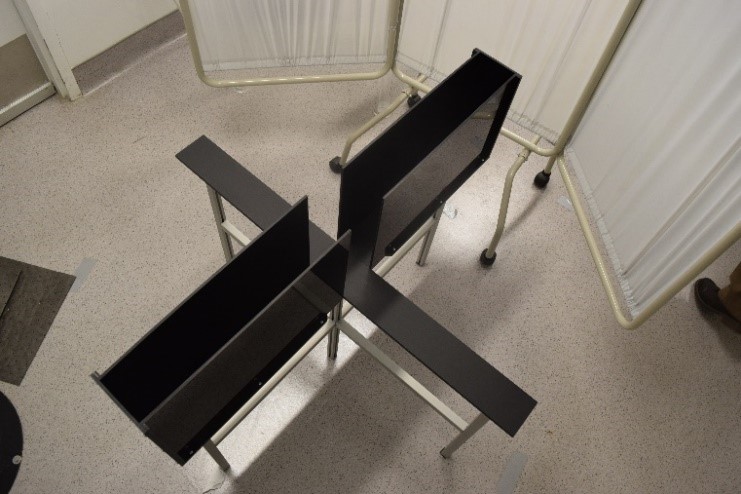
Elevated Plus Maze

Rat Sociability Chamber
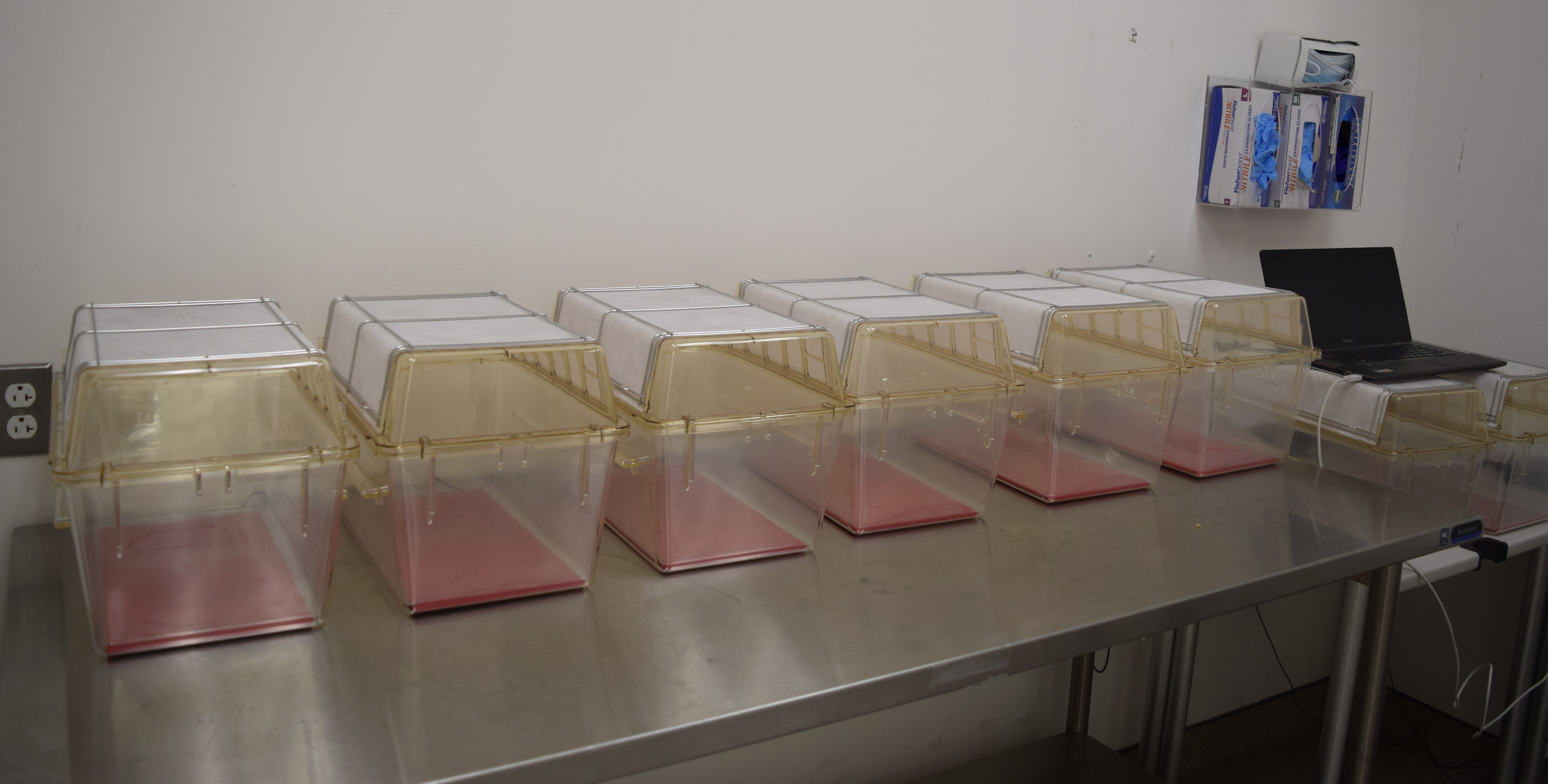
Sleep Room


High speed cameras record video during blast exposures for experimental and quality purposes.
Unique design of shock tube with the combination of catch tank.
The catch tank completely absorbs both electrostatic and physical effect of shock wave.

Purpose: Generate field-relevant blast-shock profile in the study of shock-structure interactions and the effect of shock pulse on headforms and post mortem human specimen.
Capabilities: The pressure measurements can be done through this shock tube from 20 kPa up to 275 kPa (This range is indicated for incident pressure measurements).


Both shock tubes have an adjustable test section option. In addition, multiple membranes (Mylar membranes) and different kinds of driver gases (He, N, Air) can be used in the experiments.


Pinnacle 8400 Rat Tethered System

Whole Cell Path Configuration
The ChemiDoc MP system is a full-feature instrument for gel or western blot imaging. It is designed to address multiplex fluorescent western blotting, chemiluminescence detection, and general gel documentation applications.
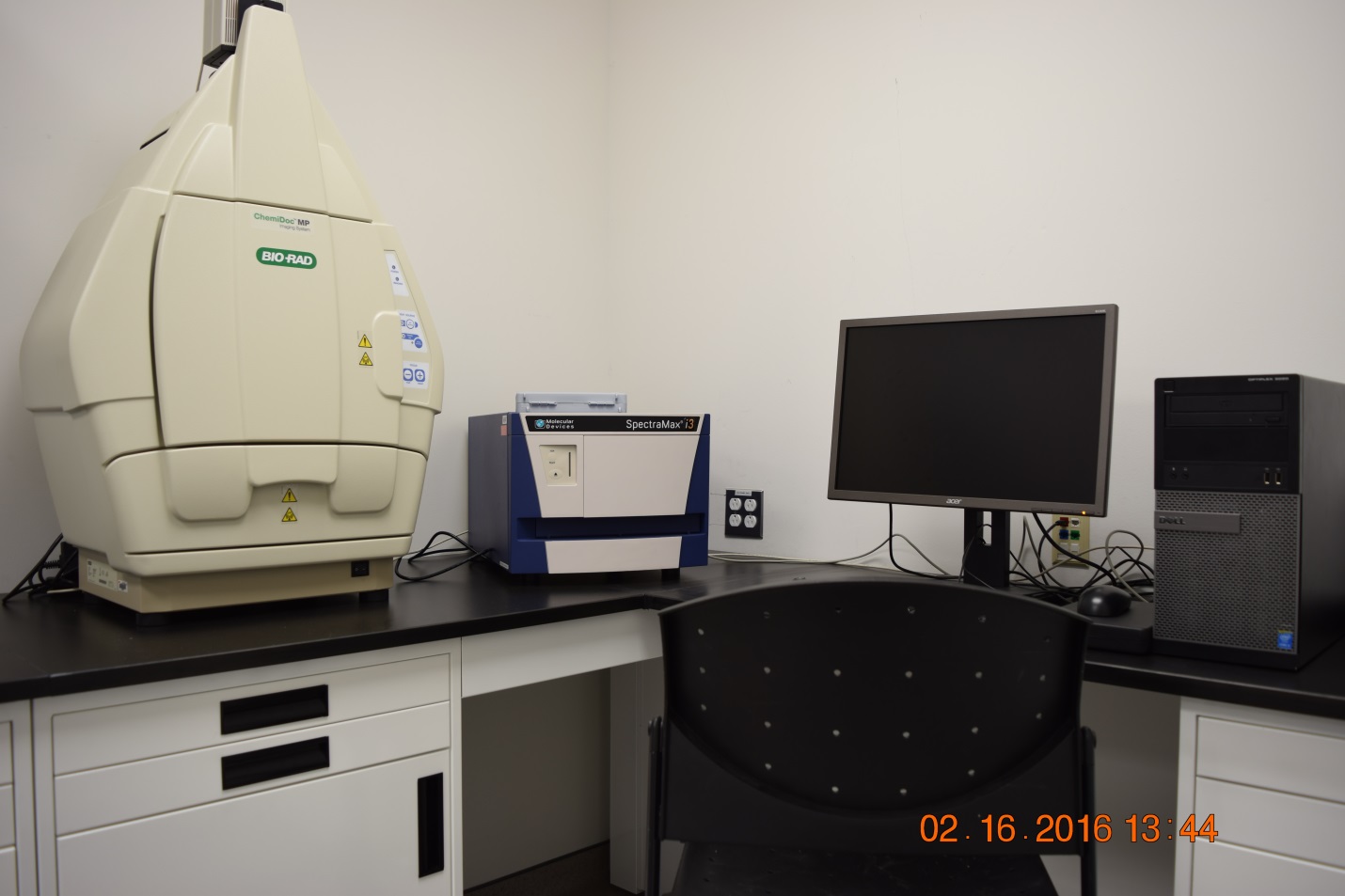
Its features are based on CCD high-resolution, high-sensitivity detection technology, and modular options to accommodate a wide range of samples and support multiple detection methods. The system is controlled by Image Lab™ software to optimize performance for fast, integrated, and automated image capture and analysis of various samples.
Features and Benefits
Multiple imaging capabilities — the ChemiDoc MP imager can accommodate a variety of sample types and detection methods including multiplex fluorescent western blotting. It is the perfect imager to accompany your protein and DNA electrophoresis runs as well as your western blotting experiments. It delivers quantitative, reproducible results for fluorescence, chemiluminescence, and colorimetric detection
Stain-free technology — UV-induced fluorescence labeling of proteins in the stain-free gels allows a 2 hr Coomassie gel-staining protocol to be condensed into a 5 min stain-and-image step. Stain-free gels are western blot compatible — using the V3 Western Workflow™, check your electrophoresis results and blot transfer quality prior to western blotting
High-sensitivity blot detection — the ChemiDoc MP imaging system offers advanced detection technology that determines optimal exposure, even for faint or intense samples. Superior sensitivity is achieved for chemiluminescence and multiplex fluorescence detection and for colorimetric gel and blot documentation
Superior Image Quality — exceptional dynamic range enables visualization of faint and intense bands on same blot or gel. Images are always in focus at any zoom level to ensure publication-ready images in seconds
Ease of Use — precalibrated system provides the precise focus for any zoom setting or sample height; automated hands-free operation ensures consistent, reproducible, and high-throughput performance
Its goals are to promote high-quality research in neuroscience and neural engineering, to train graduate students and postdoctoral fellows in an interdisciplinary environment so that they can compete in the academic and industry markets, and identify and develop synergies among research groups across different departments and colleges.
IBNR will holistically represent neuroscience and neural engineering research and training at NJIT in order to provide visibility at the national and international levels.
IBNR will collaborate with similar institutes at Rutgers University, Princeton University, other local academic institutions and local industry to stimulate the formation of NJ Neuroscience at the state level.
He most recently served as the Defense and Veterans Brain Injury Center’s (DVBIC) fifth national director from July 1, 2013 to 16 March 2016.
His most recent military medicine leadership roles include: deputy director of the Armed Forces Radiobiology Research Institute (AFRRI) for Military Medical Operations; the in-theater neurologist in Afghanistan, and chief of Nuclear Medicine Services at Walter Reed National Military Medical Center, chief of integrated nuclear medicine services for the Base Realignment and Closure process that combined the former Walter Reed Army Medical Center, National Naval Medical Center and Fort Belvoir Community Hospital.
As national director, COL Hinds oversaw all aspects of the organization’s mission, which is to serve active duty military and veterans with traumatic brain injury (TBI) through state-of-the-art medical care and care coordination, and innovative clinical research and educational programs.
COL Hinds is board certified in neurology and nuclear medicine, led DVBIC with integrated multidisciplinary approaches to care.
While deployed to Afghanistan from February to July 2012, he oversaw standardization of care at 11 concussion care centers as the theater neurology consultant and MRI utilization. Performing site visits allowed him to ensure that staff had appropriate training, education and resources. He reviewed cases, shared best practices, and worked with theater providers to identify and close gaps in patient care.
From August 1990 to March 1991, COL Hinds was the executive officer, treatment platoon leader and ambulance platoon leader of C Company, 224th Forward Support Battalion, 24th ID, in Saudi Arabia and Iraq, during Desert Shield/Desert Storm. He completed the U.S. Army Medical Department patient administration course and served at the Army Defense Medical Information System from 1991 to 1992, testing and advising the Composite Health Care System (CHCS I).
He served as the medical platoon leader, 4-64 Armor Battalion, 24th ID at FT Stewart, GA from OCT 1988 to August 1990.
COL Hinds has held multiple appointments and academic posts, including nuclear medicine consultant for the North Atlantic Regional Medical Command, assistant professor of radiology and neurology, Uniformed Services University of the Health Sciences
He graduated from the United States Military Academy in 1988 and served as a Medical Service Corps Officer from 1988 until 1992. He received his M.D. from the University of Connecticut Health Center and was re-commissioned as an Army Captain in 1996.
COL Hinds completed his neurology internship and residency at the former Walter Reed Army Medical Center and the National Naval Medical Center from 1996 to 2000. He was a staff neurologist and then chief of neurology at Landstuhl Regional Medical Center from 2000 to 2004. He completed the Walter Reed Nuclear Medicine Fellowship Program in 2006 and has been a staff nuclear medicine physician in the national capital region since that time.
COL Hinds’ awards include the Legion of Merit, Bronze Star Medal (1 OLC), Meritorious Service Medal (2 OCL), Expert Medical Badge, Parachutist Badge, and Air Assault Badge. He is a graduate of the Combined General Staff College.

The Rat 3-Chambered Sociability device was custom built in our laboratory to assess the social behavior in rodents.
This 3 chambered device is a fantastic contraption for researchers studying socialization who require an apparatus in which variables may be altered to change the premises of the experiment. The three‐chamber test is a commonly used method to measure social approach behavior in rodents. After adaptation to the thee-chamber arena, animal is released into the middle chamber and allowed to explore the other compartments. In the adjacent animal compartment a docile stimulus animal is situated in a mesh-wire container, while in the other adjacent compartment a similar container is located without stimulus animal (object compartment). The tendency to approach or avoid the compartment with the stimulus animal provides a measure of sociability.